Primary liver cancer
There is more than one type. Hepatocellular carcinoma, or HCC, arises from liver cells. Cancer beginning in bile ducts within the liver is another disease, called intrahepatic cholangiocarcinoma.
These diagnoses are not interchangeable. Ask for the precise name rather than assuming that every primary liver tumour is HCC.
Secondary cancer in the liver
A liver metastasis retains the identity of the original cancer. Bowel cancer that has spread to the liver is bowel cancer with liver metastases. A neuroendocrine tumour can also spread there.
This helps explain why two people with liver tumours might receive different medicines or different recommendations. The treatment is not chosen from the liver scan alone.
What do the tests assess?
Scans assess the number, size and location of abnormalities, their relationship to important structures and whether disease is present elsewhere. Blood tests can contribute information about liver function and general health.
A biopsy may be needed in some situations. Not everyone has every test. The specialist team should explain what is already established and what still needs clarification.
Liver function also matters
The liver processes medicines and performs other essential functions. Existing liver disease and how well the liver works can affect treatment safety.
The size of a tumour is therefore only part of the assessment. General health, the amount of functioning liver and the wider extent of disease also matter.
Is treatment always the same?
No. Options can include surgery, treatments directed at tumours within the liver and systemic medicines. Radiotherapy may be considered in selected situations. Not every option is appropriate for every primary or secondary liver cancer.
The team needs to explain the aim: cure in a suitable situation, disease control or symptom relief. A specialist MDT discussion helps bring relevant expertise together.
Questions for the appointment
Ask where the cancer started, its exact type, whether the liver is working normally and whether disease is present elsewhere. Then ask what the proposed treatment is intended to achieve and why it is preferred.
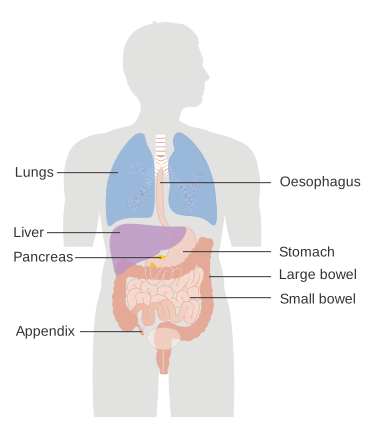
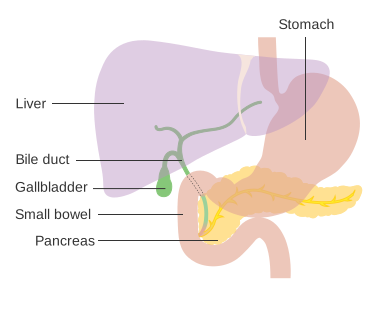
An anatomy diagram shows where the liver is. It cannot show whether an individual's tumour is operable or suitable for a particular procedure.